We are launching Kishonti Venture Factory to systematically build new companies from within Kishonti. By running multiple parallel teams focused on high-performance data processing and communication technologies, we operate on a shared technical infrastructure that allows teams to build quickly without duplicating foundational work.

After 21 years of continuous development, the source code for both GFXBench and CompuBench was released under a BSD license across multiple GitHub repositories. The software remains available to anyone who can compile it, meaning it can still be used for comparative purposes. In addition, a snapshot of benchmark results was released alongside each benchmark’s source code, allowing users to compare new results with legacy data.

Stellantis and aiMotive announced that they have entered into an agreement under which Stellantis will acquire aiMotive. The acquisition strengthens Stellantis’ AI and autonomous driving core technologies, expands its global talent pool, and accelerates the mid-term development of the all-new STLA AutoDrive platform. The deal became the largest tech exit in Hungary.

Based on our experience with automotive sensor data, we built a comprehensive, end-to-end toolchain to collect, generate, annotate, and track the data used to create safe AD solutions. aiData became our most ambitious software release.
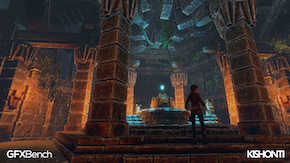
GFXBench 5.0 was our last major graphics benchmark release, featuring a new high-end scene called Aztec Ruins. As a true cross-API benchmark, GFXBench supports all industry-standard and vendor-specific APIs, including OpenGL, OpenGL ES, Vulkan, Metal, and DirectX/Direct3D 12.
We announced aiSim, the most scalable, high-fidelity sensor and environment simulation platform for real-time testing. The system was developed primarily by the former Kishonti GPU experts.

Our background in chip testing led us to conclude that the available automotive chips were not efficient enough for low-cost ADAS and self-driving applications. As a result, we built aiWare, our power-efficient, low-latency hardware IP designed for automotive AI inference on chips already in production.
Our self-driving software stack was officially named aiDrive. At the same time, the company was renamed aiMotive. One of our initial customers was Volvo.
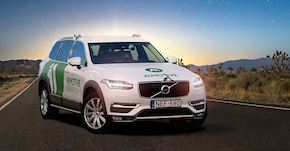
AdasWorks needed a realistic simulation engine to accelerate development and reduce the cost of testing and validation. Kishonti’s real-time automotive physics and visualization engine, together with its team of highly qualified GPU experts, created a perfect opportunity: the two teams re-merged under the AdasWorks umbrella. Kishonti Ltd. became a shareholder in AdasWorks.

ADASBench was the first benchmark to test software defined cars, using ADAS, dashboard and self-driving features.
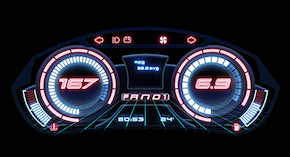
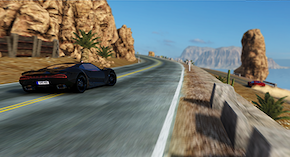
GFXBench 4.0 was our first product to support Apple's new, low level Metal API and hardware tesselation. It was also our first engine to realistically simulate car physics.
The AdasWorks team was funded by major investors Bosch, NVIDIA, and Draper Associates, and spun out as a separate company under the same name. The remaining Kishonti team continued its GPU and computer graphics research.

Our autonomous driving research team, AdasWorks, demonstrated the first vision-only self-driving car on the Hungaroring racetrack. The setup used a single embedded NVIDIA chip and standard-resolution cameras. The total cost of the compute and sensors was only a few hundred dollars, at a time when most other self-driving cars relied on lidar systems costing hundreds of thousands of dollars.

We released GFXBench 3.0 for OpenGL (ES) 2 and 3, featuring a fully redesigned UI and brand new battery, stability and render quality tests.

We introduced CompuBench, our unified compute performance benchmark for multiple APIs (OpenCL, CUDA, Metal and RenderScript).

We have merged GLBenchmark (for OpenGL and OpenGL ES) and DXBenchmark (DirectX) into GFXBench in order to make cross-platform and cross-API comparison easier.

With the release of Windows RT on ARM and Windows Phone 8, we launched DXBenchmark 2.5 and 2.7. Simultaneously, we released GLBenchmark 2.7 that makes the direct comparison of OpenGL (ES) and DirectX/Direct3D implementations possible for the first time ever.
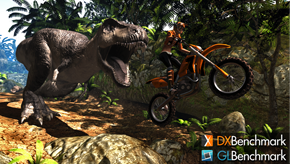
We released CLBenchmark 1.1 Desktop Edition, the first professional OpenCL benchmark for measuring and comparing the processing power of different hardware architectures like CPUs and GPUs using OpenCL standard.
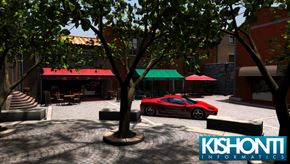
The first preview of GLBenchmark 2.5 was released. GLBenchmark 2.5 was an OpenGL ES 2.0 benchmark with brand-new graphic scenes representing high-end gaming content planned to be run at 1080p and higher resolutions.
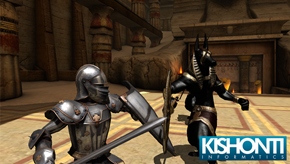
We released NaviGenie, which revolutionised mobile navigation by real-time streaming fully textured 3D maps to mass market handsets using minimal bandwidth. It won the Third Runner-Up prize at 2009 NAVTEQ Global LBS Challenge. NaviGenie was our first automotive product.
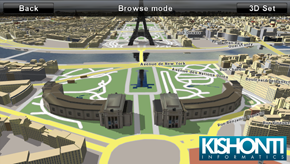
GLBenchmark 2.0 for OpenGL ES 2.0 was first demonstrated at Mobile World Congress in Barcelona. It was implemented for programmable mobile graphic chips which ever since rule the market for embedded visualization.
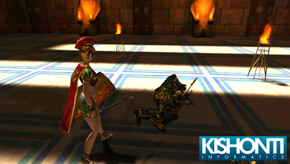
The announcement of GLBenchmark 1.0 marked a major shift in our history. The emergence of the programmable smartphones enabled us to enter the native benchmarking market and extend our support to all major mobile platforms. We launched a new native performance database at glbenchmark.com.
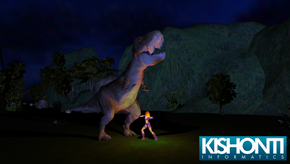
Our first benchmark optimized for hardware accelerated mobile 3D graphics was released as JBenchmark HD. It included new, important rendering quality measurements which helped consumers and professionals to differentiate between GPUs and "old" software based solutions.
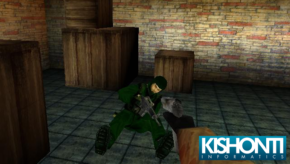
We released JBenchmark 3D, the first 3D benchmark utilizing the Mobile 3D Graphics (M3G 1.0 or JSR184) API.
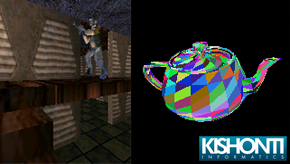
JBenchmark 2.0 was launched for MIDP 2.0 platform. It was the first benchmark we developed in the framework of JBenchmark Development Program in cooperation with other leading companies.
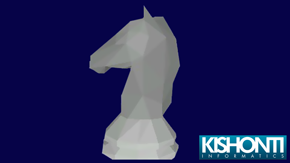
We launched JBenchmark 1.0 which was the first mobile device benchmark with a public online result database. This feature made JBenchmark 1.0 the de-facto standard for Java ME MIDP 1.0 performance evaluation.
Kishonti Informatics was established in Budapest, Hungary.